


GuideApr 2, 2025
How to File California Franchise Tax in 2025: Forms, Deadlines, and Compliance Guide
Read more

Registering a business name in California takes one of three paths. Forming an LLC or corporation registers the name automatically when the Secretary of State accepts the filing ($70 for an LLC, $100 for a stock corporation). Operating under a name that isn't your legal name means filing a Fictitious Business Name (FBN) statement with your county clerk (about $25–$60), which California requires within 40 days of starting business and includes a four-week newspaper publication step. Neither one gives you trademark rights; that is a separate filing.
Key takeaways:
What some states call an assumed name certificate or trade name, California calls a Fictitious Business Name statement. The steps below cover each path, with current fees as of 2026.
California requires entity names to be distinguishable from businesses already on file with the Secretary of State, so confirm availability before you commit to a name.
An online California business name search is preliminary, not a guarantee. The Secretary of State only confirms availability when it processes and accepts your actual filing.
California lets you reserve a name for 60 days so no one else can claim it while you finish your setup. This is optional, and useful only when you're not ready to file formation documents yet.
If you're serious about the name, file your formation documents inside the 60-day window rather than treating the reservation as long-term parking.
Your name is registered as part of forming your entity. California does not require a separate name registration if you form a legal entity under that name — the formation filing is the registration.
Two follow-up filings catch new owners off guard. First, California LLCs and corporations must file an initial Statement of Information within 90 days of formation ($20 for LLCs, $25 for corporations). Second, registering your name doesn't register your tax accounts. You'll still need an EIN from the IRS (here's how to file Form SS-4) and, for LLCs and corporations, you'll owe California's $800 minimum franchise tax. Our California franchise tax guide covers the forms and deadlines.
Budget for the whole stack, not just the name: formation fee, Statement of Information, and the $800 annual franchise tax. The name registration itself is the cheapest part.
A DBA (Doing Business As) lets you operate under a name different from your official one. In California it's officially a Fictitious Business Name (FBN) statement. It's the most common filing for sole proprietors, and it's how an LLC or corporation runs a second brand without forming a new entity.
An FBN doesn't create a separate legal entity, and it doesn't change your liability or tax status. Your legal name stays the one on file with the Secretary of State (or your personal name, for sole proprietors); the FBN is simply an alternate, public-facing name your existing business uses. California FBN filings are also non-exclusive: registering one doesn't stop another business from using a similar name. Real name protection comes from the trademark layer in Section 5.
Newspapers handle FBN publication constantly, and many county clerk websites list approved papers. Ask the paper to file the affidavit of publication for you; most will.
Registering your name with the state or county gives you the right to use it, but it doesn't stop a competitor in another county (or state) from trading on it. Trademarks do that, and you have two layers to choose from.
A trademark protects the name as a brand; entity or FBN registration protects it as a legal identity. Growing businesses usually end up needing both.
Registration answers "can I legally operate under this name," not "does this name belong only to me." Four common misconceptions:
You can change your official business name anytime, but it requires a filing rather than just updating your website.
Then run the branding sweep: website, invoices, contracts, social profiles, and anywhere else the old name appears.
The full fee picture, current as of 2026:
| Filing | Fee | Where |
|---|---|---|
| Name reservation (60 days) | $10 | Secretary of State |
| LLC Articles of Organization (LLC-1) | $70 | Secretary of State |
| Articles of Incorporation (stock corp) | $100 | Secretary of State |
| Initial Statement of Information | $20 LLC / $25 corp | Secretary of State |
| FBN / DBA filing | ~$25–$60 + publication | County clerk |
| Certificate of Amendment (name change) | $30 | Secretary of State |
| California state trademark | $70 per class | Secretary of State |
| Federal trademark (USPTO) | $350 per class | USPTO |
Keep digital copies of every receipt, stamped filing, and certificate. You'll need them for business banking, licenses, and tax accounts.
Once your California business is registered and you open a business bank account, the paperwork shifts from filings to bookkeeping. Jupid is an AI accountant that connects directly to your business bank account and categorizes every transaction at 95.9% accuracy, so income and deductions stay organized from your first sale. You ask questions in plain language over WhatsApp or iMessage ("how much did I spend on filing fees this quarter?") and get answers from your real bank data. Try Jupid and start with books that keep pace with your new business.
This guide is for general educational purposes and does not constitute legal or tax advice. California fees and filing rules can change; confirm current amounts with the Secretary of State and your county clerk. For advice specific to your situation, consult a qualified professional.

CEO & Co-Founder
Fintech CEO with 10+ years building accounting and financial technology products. Previously co-founded and scaled an AI-powered accounting platform to $30M revenue and 100K+ business users, achieving 30,000 customers per accountant through automation — recognized by CNBC as a top fintech company. Holds a Master's in Management Information Systems. At Jupid, he leads the development of AI-native bookkeeping, tax, and compliance tools designed for freelancers and small business owners.
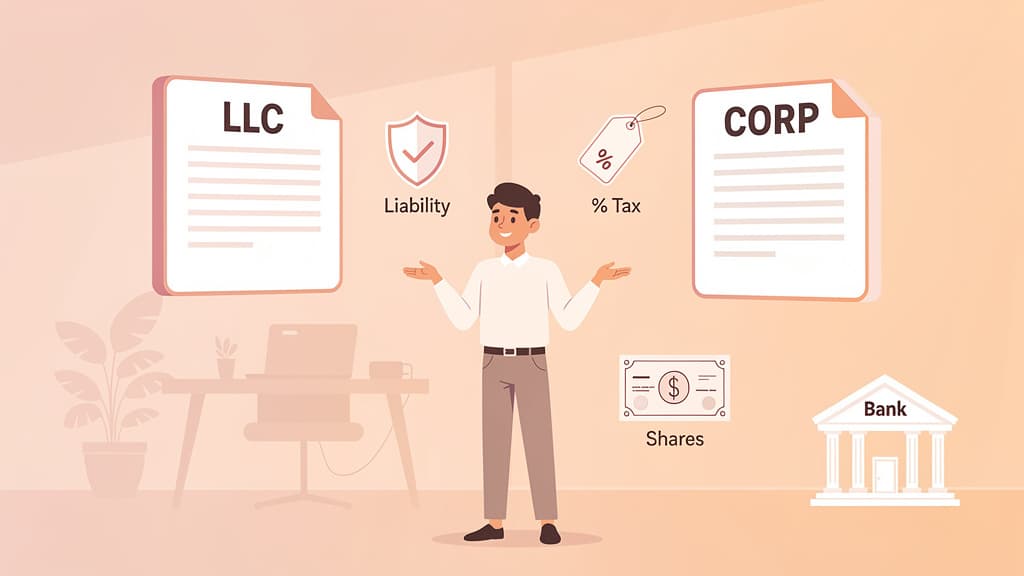
LLC vs corporation explained: taxes, liability, fundraising, and state costs in Texas and California. A founder's guide to choosing the right structure.

Texas franchise tax reports are due May 15. The 2026 no-tax-due threshold is $2.65M. Forms 05-102, 05-169, and 05-158, plus how to file via Webfile.
New here? Enter this code at checkout and your first month is on us — full AI bookkeeping, tax filing, and a 24/7 accountant, $0 for 30 days.
New customers. First month free with code NEW2026, cancel anytime.
Join 1,000+ businesses using Jupid to save time and money. Start simplifying your finances today.
30-day money-back guarantee